Research Skills

Sharpen Your Skills
Skill-building is an important part of preparing for and engaging in research. Explore below to find resources that will help you build these critically-important skills and mature as a researcher.
All researchers, students and faculty, must participate in safety and ethics training before engaging in research. Once you’ve identified your project, you must enroll in training appropriate to your field.
Some sessions may teach you about standard practices and safety measures; others may issue protective devices (for example, a radiation safety badge) and inform you of your responsibilities. If you work with humans or animals, more in-depth training will be provided.
The Office of Research Integrity and Assurance provides information about procedures, training, regulations, and resources through the Responsible Conduct of Research site.
Additional ethics and safety training resources include:
- Training in the care and use of animals in research and teaching
- Training in for researchers in the use of human participants
The Cornell Undergraduate Research Board (CURB) also works with the Department of Environmental Health and Safety to provide basic, hands-on safety training courses for undergraduate researchers.
Statistics is an important skill for many research topics, as it allows you to describe the impact of research. Statistics classes are offered in many of Cornell's colleges and schools, and there is individual help available for undergraduate researchers.
The Cornell Statistical Consulting Unit (CSCU) helps faculty, students, and staff with the application of statistical methods in their research. They assist researchers with the method section of grant proposals, the design of their experiments or surveys, the organization of the data, the planning and implementation of the statistical analysis, and the interpretation and write up of results. Statistical consultants at CSCU are available during walk-in hours or by appointment in Savage Hall (B07-B13).
Librarians at Cornell are highly involved and helpful with undergraduates interested in research, and they write guides that can help students with research in most disciplines.
The Knight Institute walk-in writing service offers help with writing abstracts and research papers.
In order to publish your research, you results must tell a complete story. For some students, their work will be included in a publication written by their research group. Some honors students will go on to publish their thesis work.
If publishing is a goal for you, ask your research advisor about their policies for including undergraduate authors on publications.
Latin honors are based on GPA, rather than research participation. Students may graduate with honors in an academic activity; please refer to the Office of the University Registrar site for more information.
Presenting Your Research
Sharing your research on and off campus is an important way to develop your skills, explore new possibilities, and connect with others in research. Cornellians have several opportunities to participate through student organizations, work experiences with faculty, or university membership through national organizations.
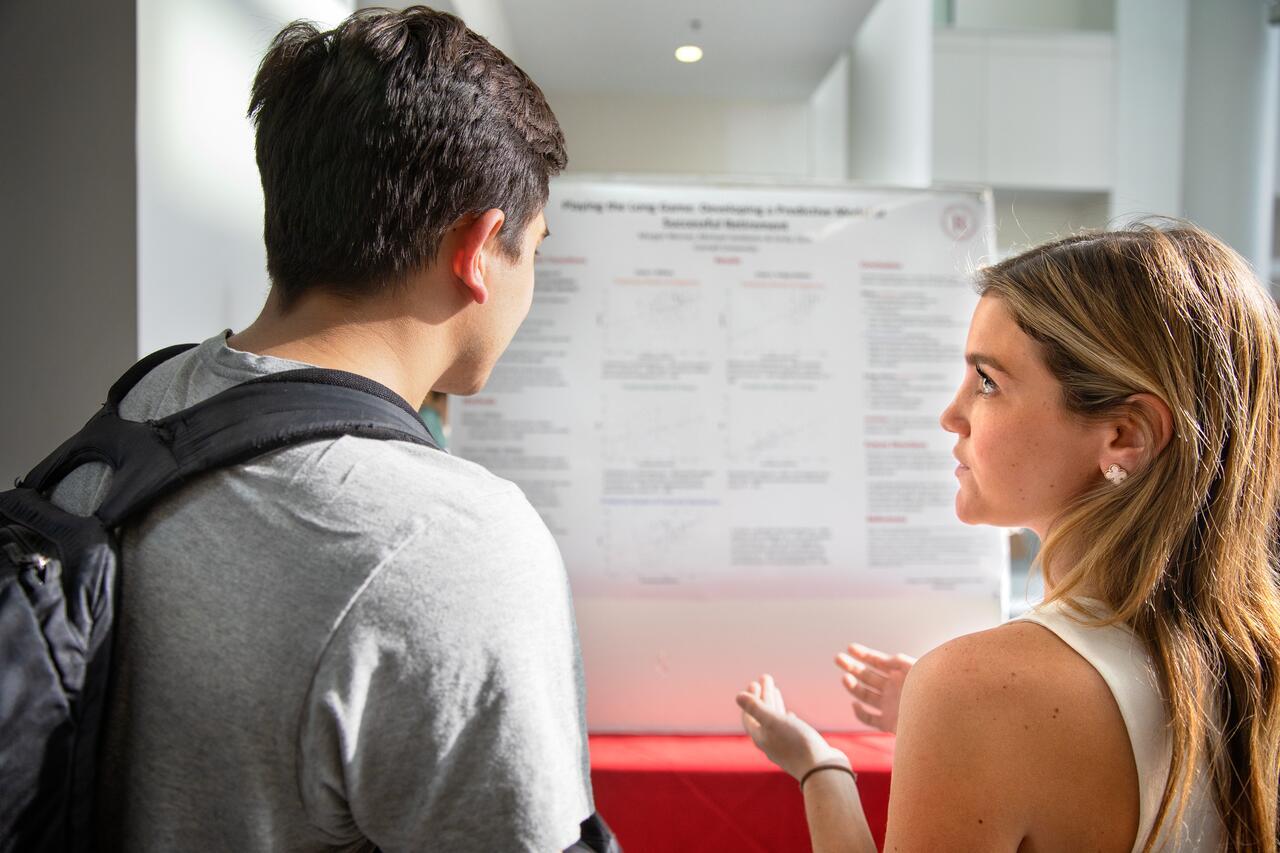
The Cornell Undergraduate Research Forums
The Cornell Undergraduate Research Board (CURB) is a student organization with members from all undergraduate colleges and schools. CURB hosts several events each year that spotlight undergraduate research projects, including annual Fall and Spring Forums.
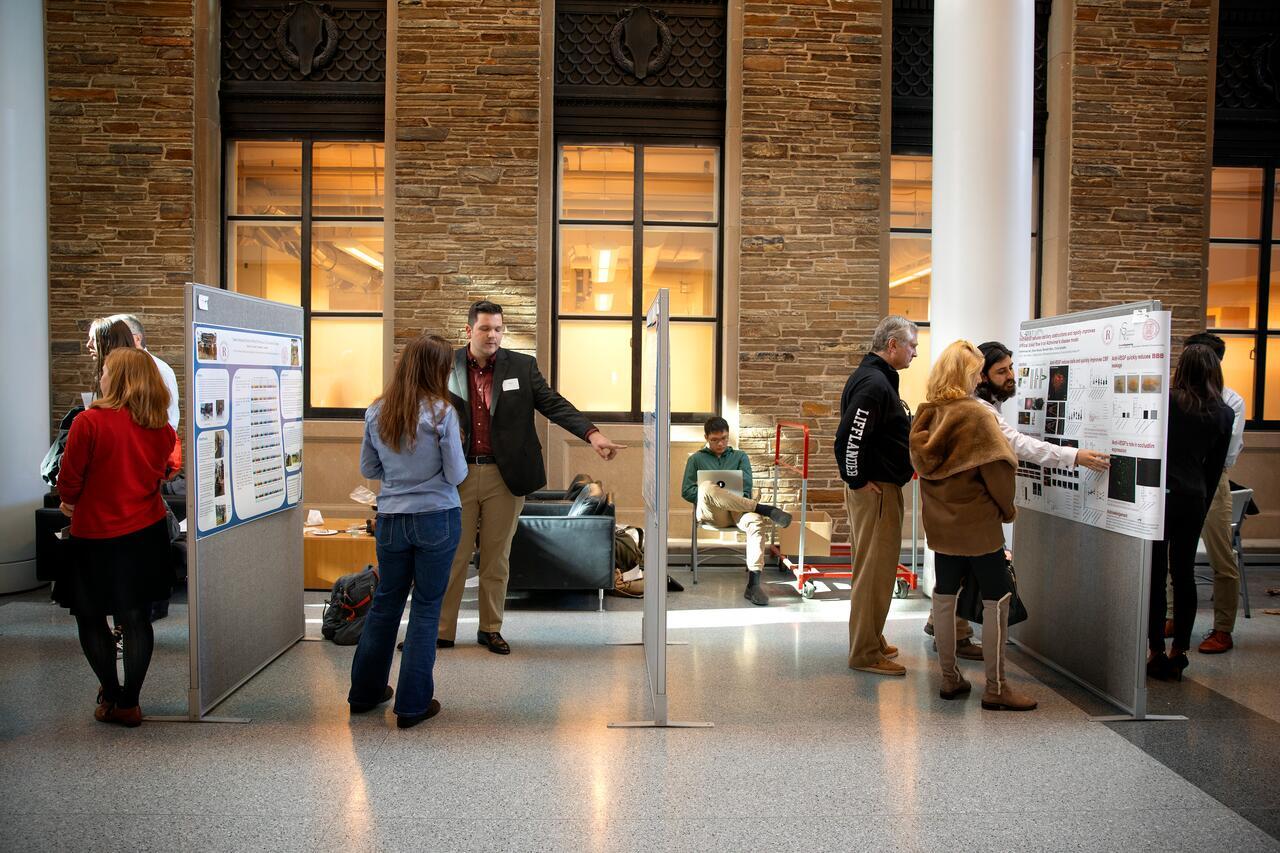
The Leadership Alliance National Symposium
Cornell is a proud member of the Leadership Alliance that develops students into outstanding leaders and role models in academia, the public, and the private sector. The Leadership Alliance National Symposium (LANS) has been a pivotal gathering for undergraduates, graduate students, postdocs, faculty, and program leaders committed to advancing diversity in research and academia.
Conferences and Off-Campus Opportunities
Each year, Cornell students give talks at professional scientific and scholarly meetings, along with graduate students, post-docs, and faculty. Cornell students have presented conferences hosted by:
- American Society for Microbiology
- American Arachnological Society
- Animal Behavior Society
- Annual Biomedical Research Conference for Minoritized Scientists (ABRCMS)
- Biomedical Engineering Society
- Society for Advancement of Chicanos and Native Americans in Science (SACNAS)
- Society for Neuroscience
and many more!