Resources and Support

Is Research for You?
Research takes place in a variety of settings and shares the common motivation of gaining new knowledge. Some research is applied and may ultimately lead to the betterment of people’s lives in New York State, the nation, and the world. Other research is at a basic level, but can lead to a revolutionary change in the way we think. There are many ways to engage in research, and only you will be able to determine if you want to get involved in research.
There are many kinds of research done at Cornell. We have excellent scientists and engineers, with well-equipped and staffed laboratories; other faculty may work outdoors in nature or with people in their community. Some research is done in front of a computer screen, using sophisticated software.
Research can be done almost everywhere, including schools, hospitals, laboratories, libraries, museums, field sites, and more. It's done here in Ithaca, across the United States, around the world—even in space! Where you do research is up to you and your interests.
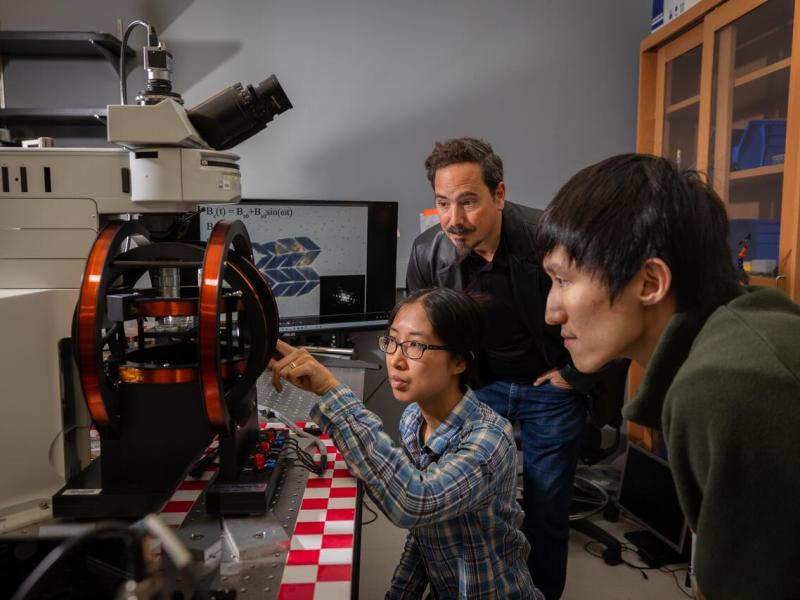
Research is often done by teams of people who have different expertise and experience. Undergraduate students may join teams composed of faculty members, graduate students, post-doctoral students, and others. A research experience provides an opportunity to learn from those team members and create lasting ties.
One of the greatest myths is that only scientists can do research. The truth is that research is fundamental to all fields of scholarship. Faculty at Cornell are leaders in the research done in their discipline, and research is happening in every college, department, and unit on campus. There are also a number interdisciplinary projects that transcend majors and departments.
Many first- and second-year students decide to explore research by volunteering on projects and networking to meet faculty. Through this process, they develop necessary skills and move on to more independent positions during their junior and senior years. Take your schedule into consideration and allow yourself to transition to college; you can get involved in undergraduate research when you’re ready.
Cornell has ample opportunities for you to pursue your interests, including pursuing research in an area outside of your major. Often, you’ll find the techniques and principles applied in one field relate to another. Interdisciplinary synthesis is a powerful tool! It’s also a skill you’ll continue use after graduation.
Many Cornell faculty are involved in research in other countries, and undergraduates can often get involved in those projects as well. In addition, the Office of Global Learning may be able to advise you on research-focused programs abroad.
Participating in undergraduate research at Cornell is not a requirement; it is on opportunity you can choose to take part in. Research can be both wonderful and frustrating. It involves long hours and days in the library, lab, or the field, sometimes without positive results. Most researchers work for many, many years on a question. Research should be done because you're interested in the topic, not because you feel obligated to do it.
Alternative Ways to Broaden Your Intellectual Experience
It may be challenging to find research opportunities in certain areas, or options may be limited. You also may not have the time to commit to a formal research project. That doesn't mean you can't explore a topic or interest; you'll just need to pursue a less traditional approach. You can:
- Join a student club.
- Take upper-level or graduate classes in your field.
- Take classes in subjects that you're interested in outside of your major.
- Work with not-for-profits in Ithaca through the Einhorn Center for Community Engagement.
- Explore opportunities through Cornell Career Network.
Looking for More Advice?
Check out the Research module in Cornell Career Services' Career Development Toolkit,* which explores how research is conducted in various disciplines and how to get involved. The module will help you determine if research is right for you, identify possible funding sources, assess how undergraduate research can impact your career development, and seek out research recognition opportunities.
*The Career Development Toolkit is only available for current Cornell students and requires a NetID login.